




Subdural Haemorrhage

Neurosurgery

Acute and Chronic Subdural Haemorrhage

Understanding the Difference:

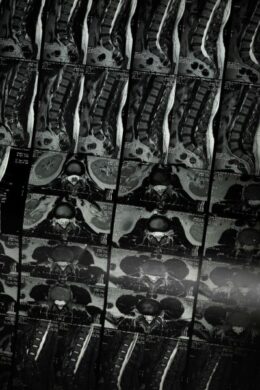
  • Acute Subdural Haemorrhage: Occurs immediately after a head injury, resulting in thick bleeding that may require urgent evacuation via craniotomy.
  • Chronic Subdural Haemorrhage: A slow “ooze” following minor head trauma. It is an inflammatory process involving repeated healing and bleeding over a long period.

Patients with chronic haemorrhages may tolerate larger volumes of blood before showing symptoms, but significant “mass effect” or midline shift requires neurosurgical intervention.


Book Appointment

Still unsure who to book in with?
Not sure which doctor to choose? Get in touch with our friendly reception team who can point you in the right direction and give suggestions.
Call us 02 9699 8111

Let our doctors guide you to better health so you can live your best life

var rocket_beacon_data = {"ajax_url":"https:\/\/gshealth.com.au\/wp-admin\/admin-ajax.php","nonce":"327197202c","url":"https:\/\/gshealth.com.au\/service\/neurosurgery\/subdural-haemorrhage","is_mobile":false,"width_threshold":1600,"height_threshold":700,"delay":500,"debug":null,"status":{"atf":true,"lrc":true,"preconnect_external_domain":true},"elements":"img, video, picture, p, main, div, li, svg, section, header, span","lrc_threshold":1800,"preconnect_external_domain_elements":["link","script","iframe"],"preconnect_external_domain_exclusions":["static.cloudflareinsights.com","rel=\"profile\"","rel=\"preconnect\"","rel=\"dns-prefetch\"","rel=\"icon\""]}